Tag: CRM software

  • Boost Your Sales Game: How CRM Software for Sales Automation Transforms Your Business

    Hey there, sales superstars! Ever feel like you’re drowning in admin tasks instead of closing deals? You’re not alone. Many businesses struggle with manual processes that eat up valuable time. But what if there was a way to put your sales on autopilot, letting you focus on what truly matters? Enter CRM software for sales automation.

    This isn’t just a fancy term; it’s a game-changer. Imagine a tool that handles the grunt work, nurtures leads, and helps your team stay organized, all while you kick back a little (or close more deals!). Let’s dive into how this awesome tech can revolutionize your sales strategy.

    Why You Need CRM Software for Sales Automation in Your Toolkit

    If you’re still doing things the old-fashioned way, you’re likely missing out on efficiency and opportunities. Modern sales demand modern solutions, and that’s exactly what CRM software for sales automation brings to the table.

    Streamline Lead Management

    No more lost leads or forgotten follow-ups! A good CRM system helps you capture, track, and score leads automatically. It ensures that every potential customer gets the attention they deserve, moving them smoothly through your sales funnel. This means less guesswork and more predictable outcomes for your sales team. [IMAGE_PROMPT: A vibrant, photorealistic image showing a digital sales pipeline dashboard with colorful stages (Lead, Prospect, Qualified, Closed Won), animated arrows indicating smooth transitions, and a sales professional smiling confidently in the background, working on a laptop.]

    Automate Repetitive Tasks

    Think about all those tedious tasks sales reps have to do daily: sending follow-up emails, scheduling appointments, updating customer records. CRM software for sales automation takes these off their plate. It can automatically send personalized emails, set reminders, and even update contact information, freeing up your team to do what they do best: sell.

    Enhance Customer Relationships

    Automation isn’t just about speed; it’s also about quality. By having all customer data in one place and automating communications, you can provide more consistent and personalized experiences. This leads to happier customers, stronger relationships, and ultimately, more repeat business and referrals.

    Key Features to Look for in Your CRM Software for Sales Automation

    Ready to jump in? Great! But before you pick just any system, here are some must-have features to ensure you’re getting the best bang for your buck:

    • Lead Scoring & Nurturing: Automatically rank leads based on their engagement and fit, ensuring your reps focus on the hottest prospects.
    • Email Automation & Templates: Send personalized emails at scale, saving time and maintaining a consistent brand voice.
    • Pipeline Management: Visualize your entire sales process, identify bottlenecks, and forecast revenue more accurately.
    • Reporting & Analytics: Get deep insights into sales performance, identify trends, and make data-driven decisions.
    • Mobile Accessibility: Empower your sales team to access and update information on the go, anytime, anywhere.

    Choosing the Right CRM for Your Business

    With so many options out there, picking the perfect CRM software for sales automation can feel a bit overwhelming. Start by assessing your business’s specific needs, budget, and integration requirements. Does it need to connect with your existing marketing tools? How scalable does it need to be? Don’t be afraid to try out demos and read reviews to find a system that truly fits your unique workflow. Remember, the goal is to make your life easier, not more complicated! [IMAGE_PROMPT: A close-up, photorealistic image of a hand interacting with a sleek, modern CRM dashboard on a tablet, displaying various sales metrics, graphs, and automated task lists. The background is slightly blurred with office environment elements.]

    Get Ready to Automate and Elevate!

    Investing in CRM software for sales automation is one of the smartest moves you can make for your business. It’s not just about saving time; it’s about boosting productivity, improving customer satisfaction, and ultimately, driving significant revenue growth. So, what are you waiting for? Start exploring your options today and get ready to transform your sales process from manual grind to automated win!

  • Unlock Stellar Service: Your Guide to the Top-rated CRM for Customer Support

    Unlock Stellar Service: Your Guide to the Top-rated CRM for Customer Support

    Hey there! Ever wonder how some companies consistently deliver amazing customer service? Often, the secret sauce is a powerful Customer Relationship Management (CRM) system. When you’re looking to elevate your customer interactions and streamline your support team’s efforts, finding the Top-rated CRM for Customer support becomes your mission. Let’s dive into what makes a CRM stand out and how it can transform your customer service experience.

    Why a Top-Rated CRM is a Game-Changer for Customer Support

    In today’s fast-paced world, customers expect quick, personalized, and consistent support across all channels. Without a robust system, this can feel like herding cats! A top-rated CRM for customer support brings everything into one neat package, allowing your team to:

    • Have a Unified Customer View: No more asking customers to repeat themselves. Every interaction, purchase, and preference is at your team’s fingertips.
    • Boost Efficiency: Automate repetitive tasks, route tickets smarter, and resolve issues faster.
    • Offer Personalized Experiences: With a complete history, agents can tailor responses and solutions, making customers feel truly valued.
    • Improve Team Collaboration: Support agents can easily share information and collaborate on complex issues, ensuring a smooth customer journey.

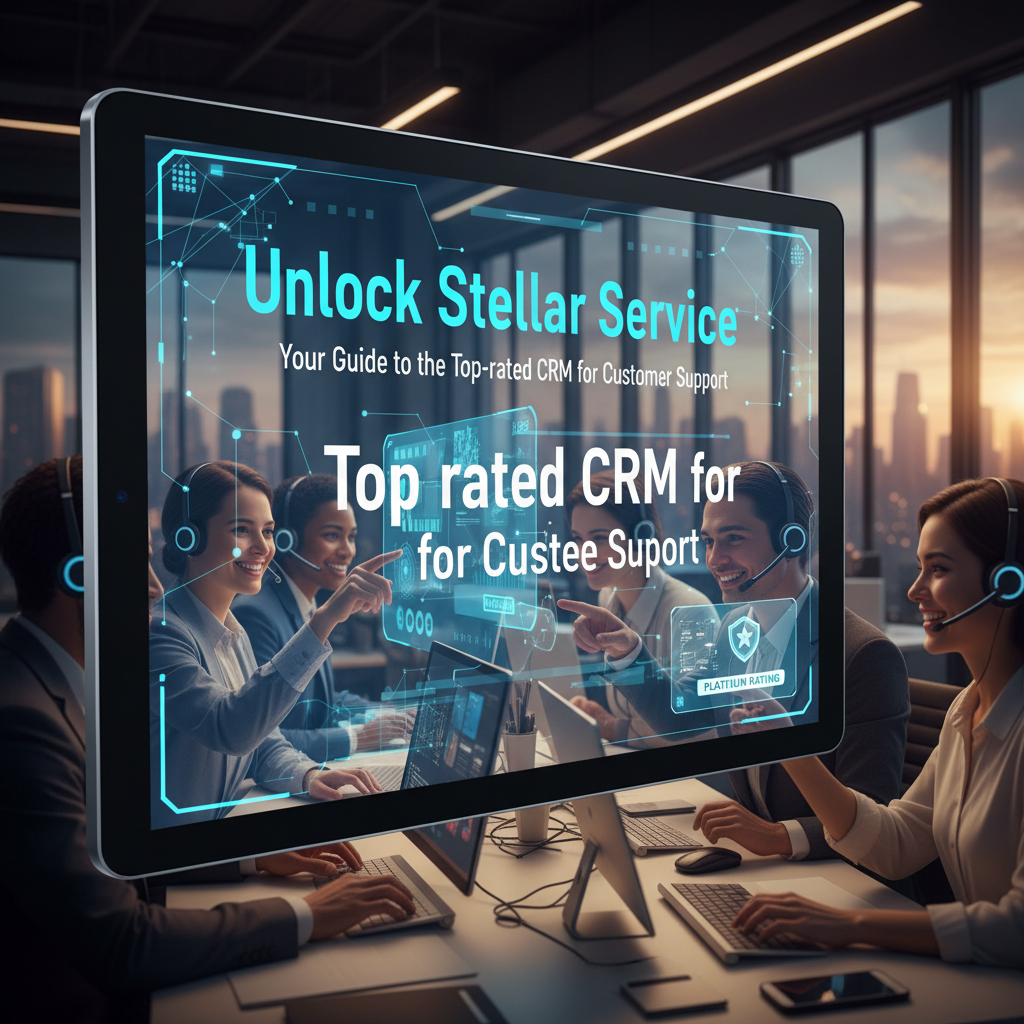
    A diverse group of customer support agents smiling and collaborating effectively while looking at a unified CRM dashboard on a large monitor in a modern, brightly lit office. The screen shows customer interaction history and open tickets. Photorealistic, warm lighting.

    Essential Features of a Top-rated CRM for Customer Support

    So, what exactly should you look for when hunting for the Top-rated CRM for Customer support? Here are some non-negotiables:

    #### Unified Inbox & Multi-channel Support

    Your CRM should consolidate interactions from email, chat, phone, social media, and more into a single, easy-to-manage inbox. This prevents queries from falling through the cracks and ensures consistent service, no matter how a customer reaches out.

    #### Automation and Workflow Management

    Imagine automatically routing urgent tickets to the right specialist or sending follow-up emails without manual effort. A great CRM automates these tasks, freeing up your team to focus on complex problem-solving.

    #### Knowledge Base Integration

    An integrated knowledge base allows agents (and even customers, via self-service portals!) to quickly find answers to common questions. This speeds up resolution times and reduces the workload on your support team.

    #### Robust Reporting and Analytics

    To truly optimize your support, you need data. A top-rated CRM offers detailed reports on agent performance, resolution times, customer satisfaction, and more. These insights are invaluable for identifying trends and making data-driven decisions.

    #### Seamless Integrations

    Your CRM shouldn’t live in a silo. Look for solutions that integrate well with other tools you use, such as e-commerce platforms, marketing automation software, and communication tools. This creates a cohesive ecosystem for your business.

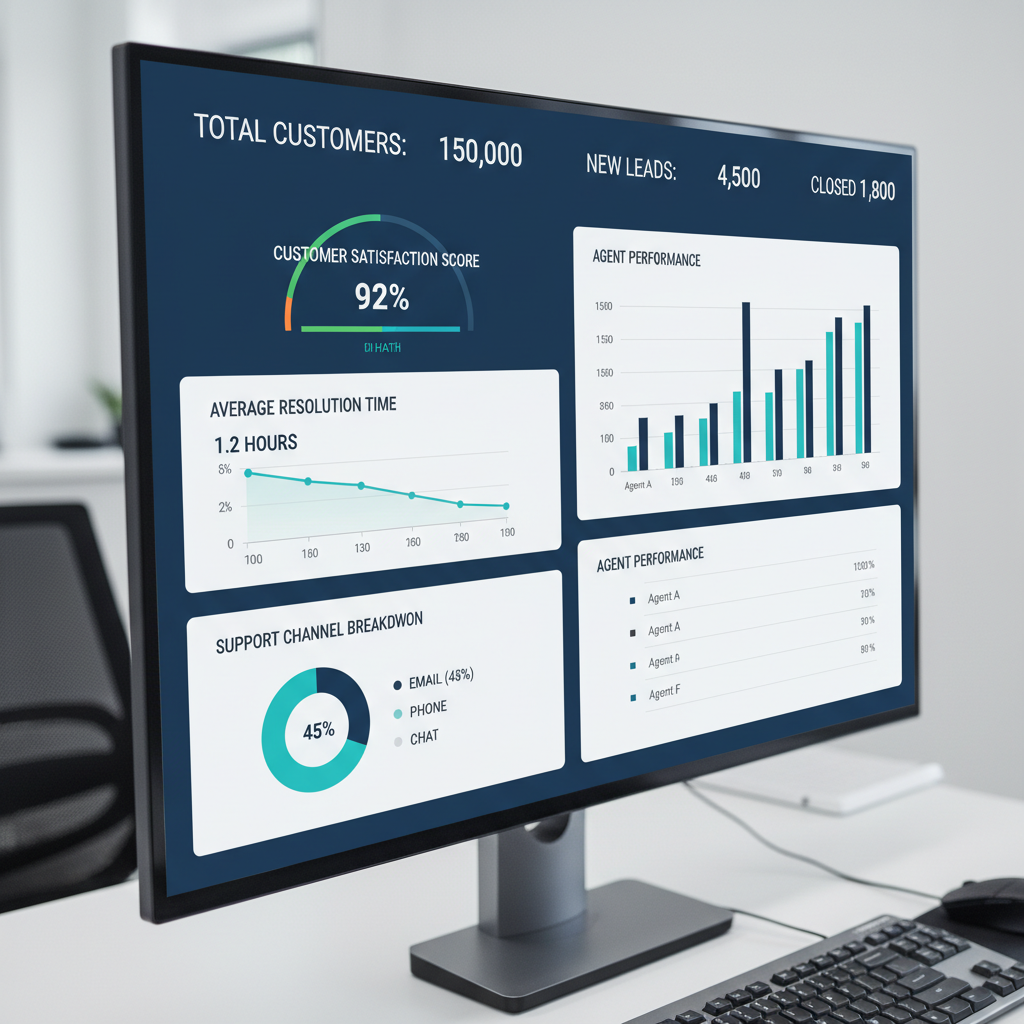
    A detailed, close-up shot of a CRM analytics dashboard displaying various charts and graphs, including customer satisfaction scores, average resolution time, and agent performance metrics. The screen is clean, modern, and easily readable with data visualizations. Photorealistic, high-contrast.

    Finding Your Perfect Match: How to Choose a Top-rated CRM for Customer Support

    While the market offers many excellent options, the “best” CRM is ultimately the one that fits your specific needs. Consider these points:

    • Business Size and Needs: Are you a small startup or a large enterprise? The scale of features and pricing will vary.
    • Ease of Use: A powerful CRM is only good if your team can actually use it without a steep learning curve.
    • Scalability: Choose a system that can grow with your business and accommodate future demands.
    • Budget: Be realistic about what you can afford, but also consider the ROI in terms of improved customer satisfaction and efficiency.
    • Vendor Support: Excellent support from your CRM provider can be a lifesaver during implementation and ongoing use.

    Ready to Elevate Your Support?

    Investing in a Top-rated CRM for Customer support isn’t just about buying software; it’s about investing in your customer relationships and the future of your business. By choosing wisely, you empower your team to deliver exceptional service, build stronger customer loyalty, and ultimately, drive growth. So go ahead, explore your options, and get ready to transform your customer support experience!

  • What Does CRM Stand For? Your Guide to Customer Relationship Management

    What Does CRM Stand For? Your Guide to Customer Relationship Management

    Ever heard the acronym CRM floating around in business discussions and wondered, “What does CRM stand for?” You’re not alone! It’s a common question, and understanding the answer is key to unlocking a more efficient and customer-centric approach for any business. Simply put, CRM stands for Customer Relationship Management.

    So, What Does CRM Stand For? The Full Scoop

    At its core, Customer Relationship Management (CRM) is more than just a piece of software; it’s a strategy and a system designed to manage and analyze customer interactions and data throughout the customer lifecycle. The goal is to improve business relationships with customers, assist in customer retention, and drive sales growth. A CRM system compiles customer data from various channels – including a company’s website, telephone, email, live chat, marketing materials, and social media. It centralizes all this information, making it accessible to various departments like sales, marketing, and customer service.

    Why Is CRM So Important for Your Business?

    Understanding what does CRM stand for helps you grasp its immense value. Implementing a robust CRM system offers a wealth of benefits that can transform how your business operates and interacts with its customers.

    Boost Customer Satisfaction

    With all customer information in one place, your customer service team can quickly access past interactions, preferences, and issues. This leads to faster, more personalized, and more effective support, making customers feel valued and understood. Happy customers are loyal customers!

    Supercharge Your Sales

    CRM tools provide sales teams with powerful insights into customer behavior and purchasing patterns. This allows them to identify promising leads, tailor sales pitches, and follow up at just the right time, leading to higher conversion rates and increased revenue.

    Streamline Marketing Efforts

    Marketing benefits immensely from CRM data. By segmenting customers based on demographics, purchase history, and engagement, your marketing team can create highly targeted campaigns that resonate with specific audiences, improving ROI on marketing spend.

    Key Features You’ll Find in a CRM System

    Modern CRM platforms are packed with features designed to automate tasks, improve collaboration, and provide actionable insights. Here are some of the most common and valuable ones:

    • Contact Management: Centralized database for all customer and prospect information.
    • Interaction Tracking: Logs all communications (emails, calls, meetings) with customers.
    • Lead Management: Helps businesses track and manage leads from initial contact to conversion.
    • Sales Forecasting: Predicts future sales performance based on current data.
    • Reporting & Analytics: Generates reports and dashboards to visualize key metrics.
    • Automation: Automates repetitive tasks like data entry, email follow-ups, and lead assignment.

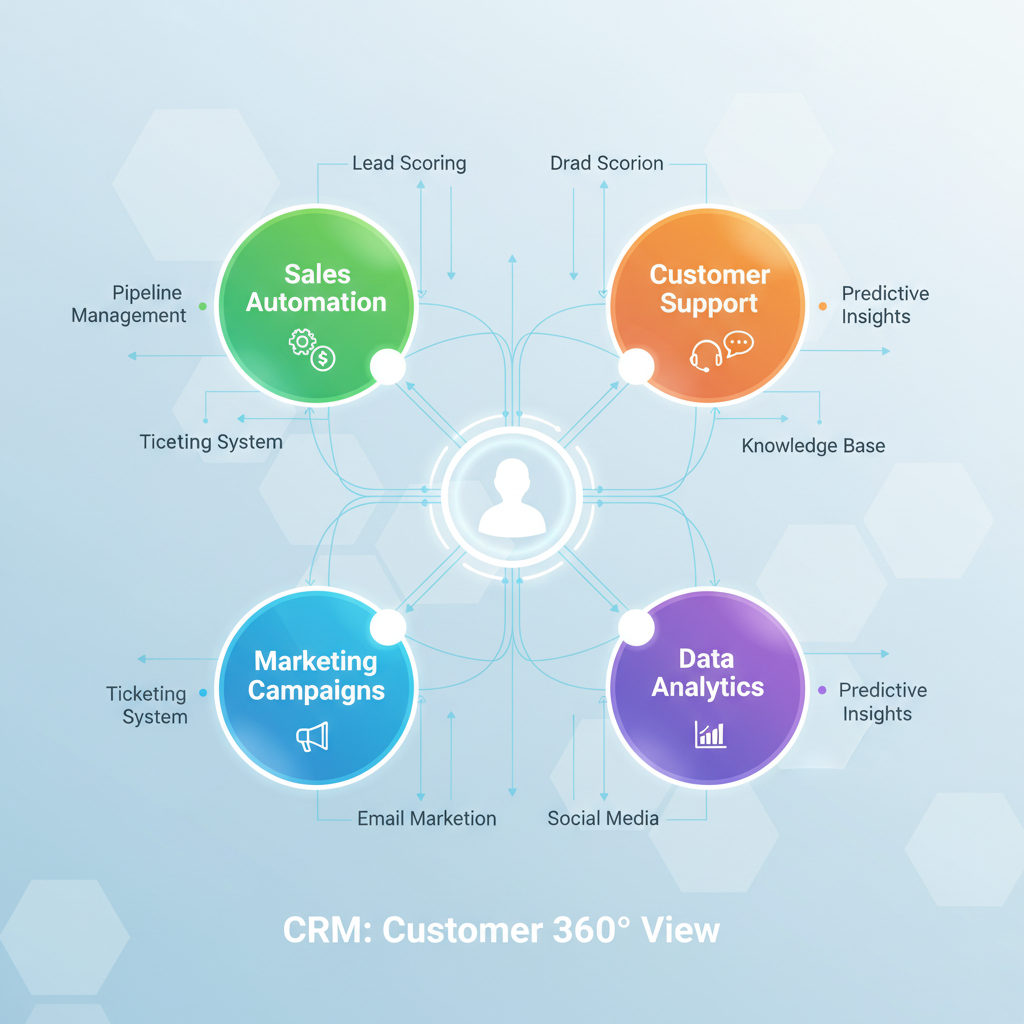
    A vibrant, detailed infographic showing interconnected bubbles representing various CRM features like 'Sales Automation', 'Customer Support', 'Marketing Campaigns', and 'Data Analytics' converging towards a central 'Customer' icon. The style should be modern and clean, with a focus on data flow and customer journey.

    Different Flavors of CRM

    While the core principle of what does CRM stand for remains the same, there are different types of CRM solutions tailored for specific business needs:

    • Operational CRM: Focuses on automating customer-facing processes like sales, marketing, and customer service.
    • Analytical CRM: Concentrates on collecting and analyzing customer data to understand customer behavior and improve decision-making.
    • Collaborative CRM: Aims to improve communication and coordination between different departments (sales, marketing, service) that interact with customers.

    Choosing the Right CRM for Your Needs

    Selecting the perfect CRM system involves evaluating your business size, specific departmental needs, budget, and integration requirements. There are many options available, from simple contact managers for small businesses to enterprise-level platforms for large corporations.

    Conclusion

    So, what does CRM stand for? It stands for a smarter, more customer-focused way of doing business. By investing in a CRM strategy and system, companies can build stronger relationships, boost efficiency, and ultimately drive greater success. It’s about putting your customers at the heart of everything you do, and that’s a recipe for long-term growth and loyalty.

    A diverse team of business professionals collaboratively working on laptops and tablets in a modern, brightly lit office. One person is pointing at a screen displaying a CRM dashboard with charts and customer data, showing engagement and efficiency. The scene should convey teamwork and technological integration.